
From support groups to community transport, from gardens and green spaces to animal rescue. The third sector is everywhere in Moray, making our lives better. It’s also working on big challenges too, like poverty, food insecurity, long-term care, inequalities and climate change.
Its role is essential to the social and economic fabric of Moray, directly impacting on both our local economy and our wellbeing.
Part of what we do at tsiMORAY, is to make sure our third sector’s contribution informs public policy priorities, so that the sector is, and can be, an equal and valued partner in decision making processes.
tsiMORAY continues to develop a comprehensive database and the Moray Community Map – that allows us to have a range of data sources on the local third sector, providing useful insights and statistics. This will help us better respond to our sector’s needs, and to make sure decision-makers have access to up-to-date and relevant knowledge about Moray’s third sector.


2025 Stakeholder Survey: What We Heard
Last year, 103 people from community and voluntary organisations, social enterprises, public sector partners and other local groups shared their views on the challenges facing the sector and the support they receive from tsiMORAY.
The results showed a sector that is resilient but under increasing pressure. Funding, volunteer capacity, rising costs and growing demand continue to be the biggest challenges facing organisations across Moray. While 55% of respondents felt positive about the future, over a quarter said they were uncertain or struggling.
Organisations told us they need more support with funding, volunteering, capacity building and demonstrating their impact.
We also heard that smaller and less-connected groups can find it harder to engage and want clearer, more targeted support.
Survey highlights:
Funding, volunteer capacity, rising costs and increasing demand remain the top pressures facing the sector.
86% said tsiMORAY’s support meets their needs well.
88% said it is easy to access support.
74% found networks and forums very helpful, up from 65% the previous year.
85% of public sector respondents said the third sector contributes more effectively to public services because of tsiMORAY.
Looking Ahead
The survey highlighted the importance of tsiMORAY’s role in connecting organisations, sharing intelligence and advocating for the third sector. Respondents told us they would like to see an even stronger focus on funding, partnership working, visibility and support for smaller organisations
Stakeholder Survey Results 2024
At the end of 2024, we asked Moray’s third sector how things were going and what we could do more of to help support our sector.
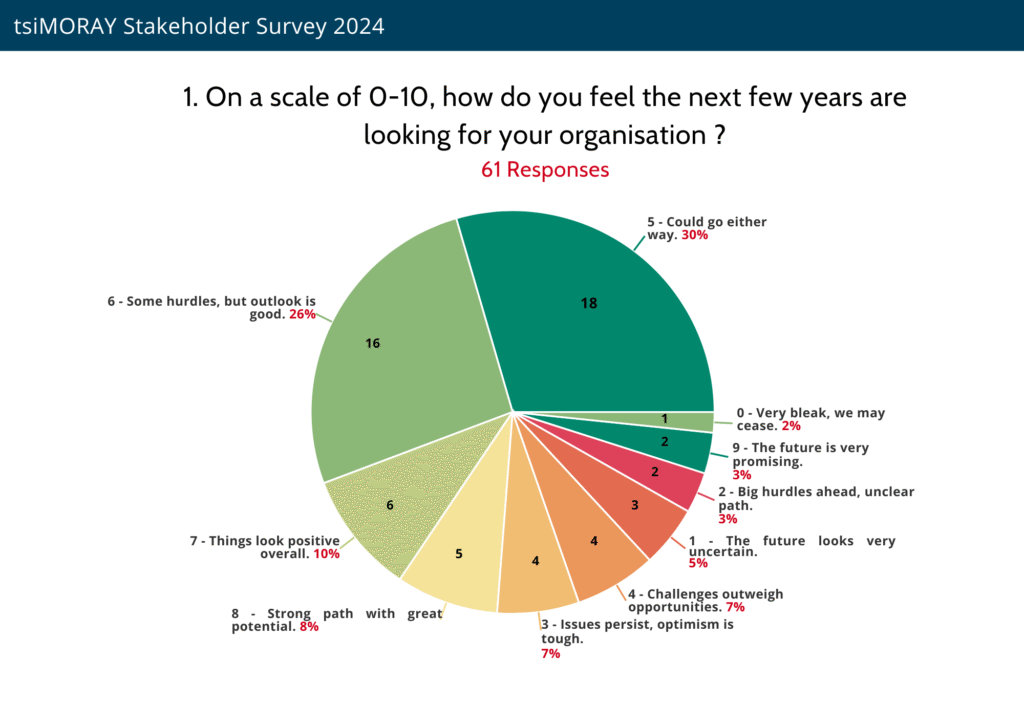
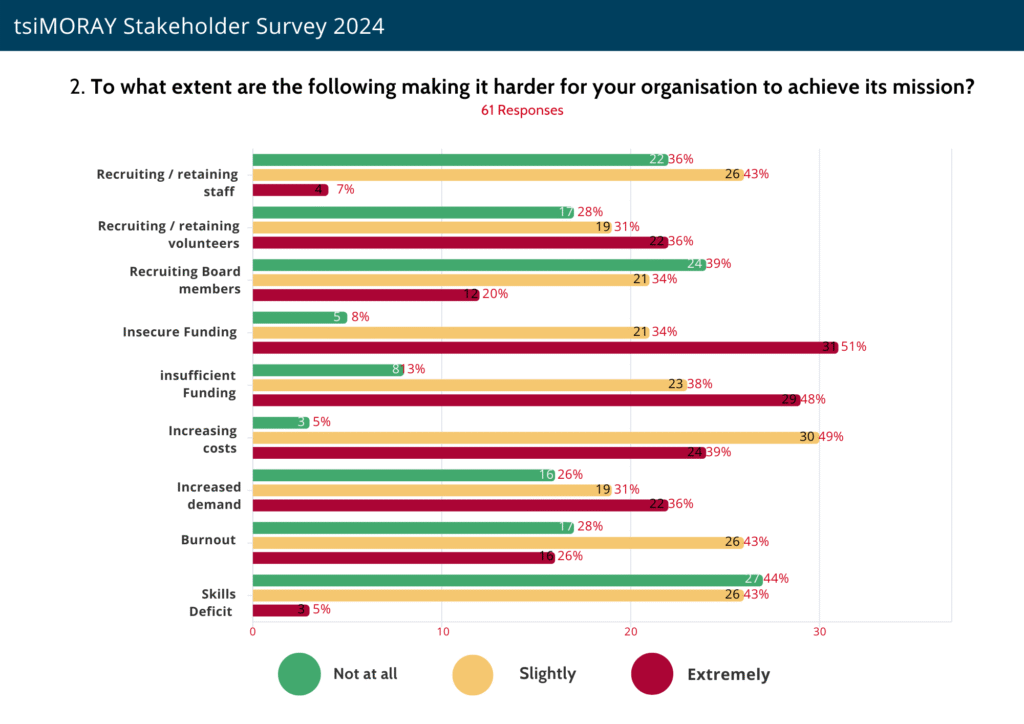
Key Summary Findings
Funding: By far, the biggest need identified in the survey – a need for more sharing of funding opportunities, along with workshops and support for funding applications. There is a call for specific training in preparing funding applications and evaluating project impact, as well as simplifying funding processes and reporting requirements. Securing core funding to aid the sustainability of local organisations and addressing systemic funding issues at national and local levels was also highlighted. Additionally, a call for more influencing with funders to align their processes with the realities and timelines of community groups.
Volunteering: There is a strong need identified for encouraging and promoting volunteering opportunities, particularly targeting younger people and addressing longstanding volunteer burnout. The findings emphasise the importance of retaining volunteers, promoting the value of volunteering, and matching volunteers with the right organisations and roles. Flexible volunteering, allowing individuals to dip in and out of opportunities, and the creation of a shared volunteer pool for third sector organisations were ideas also suggested.
Community Connection: Strengthening connections with smaller community groups was identified. Attending their meetings to understand their challenges and providing tailored support, including information sharing from meetings, are key take-away points. Ensuring community groups receive the information they need is also important.
Training and Capacity Building: There is a need for training that supports funding, volunteering, committees, and organisations on legalities, organisational development, and project evaluation. Supporting boards with recruiting new members and defining roles and responsibilities was also highlighted.
Voice: The need to highlight the work of Moray’s third sector and individual organisations through newsletters, spotlights, and at regional and national levels is important.
Responsiveness: Timely and clear communication about opportunities, processes, and meetings in newsletters and communications is necessary. Addressing capacity challenges by considering organisational time constraints was also noted.